Tuesday, 14 March 2017

Ghost Recon Wildlands update: Great news for Ubisoft's new Tom Clancy game #54

Ghost Recon Wildlands update: Great news for Ubisoft's new Tom Clancy game

Ghost Recon Wildlands

This article talks about the success of Tom calncy's Ghost Recon at beta stage and its percieved success when it is out for full release. The game is ubisofts (the game developers) largest open world game and largest open beta on record. It is compared to ubisofts previous development 'the divison' which held the previous record.

-It was played by 6.83million players and broke the record for Ubisoft's biggest beta

I believe that setting up betas for games and other programmes can be a useful promotion technique as it helps to sort any bugs in the early stages to help it on release. Moreover, a beta also helps to gain early feedback on an unreleased product which can be very useful.

Fake news inquiry to review social networks' complaints procedures #53


Fake news inquiry to review social networks' complaints procedures
https://www.theguardian.com/media/2017/mar/08/fake-news-inquiry-social-networks-complaints-policy-facebook

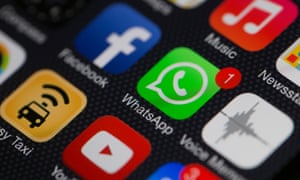
Facebook and other apps on a mobile phone

This article talks about A parliamentary inquiry into fake news is to consider legislation forcing social networks to improve the way they handle complaints after Facebook’s failure to remove sexualised images of children.

I believe that this is overdue as fake news isn't a new concept and its surprising that it has taken these companies so long to realise that it is a big deal and affects lots of people. The report button on social media is seen by many as a useless tool as rarely are they taken seriously but i agree that more needs to be  done to take images like those mentioned in the article off of social media.

MEST3 Section A exam prep

MEST3 Section A exam prep


Question 1 Media forms - 8 marks - 10 minutes

Evaluate how the two trailers use the narrative technique of enigma to encourage the target audience to watch the films.

Enigma is used several times throughout both trailers to encourage the audience to watch the films. Firstly,the theory of enigma codes proposed by Roland Barthes can be applied to several extracts from the trailers including the opening sequence of twilight in which Bella asks questions over the plot of the film which raises the audiences suspicions, there is also an action code in the form of the word 'war' which suggests to the audience that the climax to the film will include death and destruction. Moreover, for the film 'Let the right one in' enigma codes exist in the form of editing. This is because fast cuts make the film uneasy to read and in a non-linear sequence suspense is created and the audience begins to question what is going on and this entices them to watch the film. From reviewing these two trailers the film 'Let the right one in' doesn't reveal as much information as to how the plot will unfold and leaves the audience with more unanswered questions which could make the enigma codes more significant in this trailer.

Furthermore, the narrative technique of enigma is also represented via Todorov's theory of equilibrium. Firstly,  in the Twilight trailer the sense of disequilibrium is seen throughout as signs and scenes of war are shown. This creates enigma as no signs of a new equilibrium are shown,  there are only questions which don't lead to any answers. Moreover, in Let the right one in the trailer shows signs of equilibrium when the young boy is happy but continuously changes to disequilibrium of violent scenes of the possible vampire girl. This creates enigma as it leaves the audience with many unanswered questions The twilight trailer reveals more of the plot than the other film which doesn't help create enigma as the audience knows there will be a war and the only other question left is who dies in the war. Whereas, enigma is felt more strongly through the changes in equilibrium in let the right one in.

Subsequently, Propps character theory can be used to reinforce enigma being shown in the trailer. This is shown in the Twilight trailer where the heroes and villains are clearly shown which also helps to create binary opposition, however this doesn't create enigma as the audience isn't left to guess which side of good or evil the characters are on. Whereas, in the let the right one in trailer the character roles aren't solidified and you can't be sure that the young girl is the villain as the long shots don't reveal the identity of the person doing the killing. Character theory is less significant in the narrative of enigma, nonetheless it provides some questions as to why or how the characters will develop in the rest of the film which could encourage people to watch it. 


Question 2 linked to Identity, New/Digital Media or media debates - 12 marks - 15 minutes

Why are media products that represent outsiders, such as vampire films so popular? You may also refer to other media products to support your answer.

Ill Manors is a case of a media product that represents outsiders and the adolescent. The youth, who are likewise a minimized gathering pick up group of onlookers joys from watching a film focused at them as well as speaks to them. Both movies can likewise be contended to be famous not just in light of the fact that they take into consideration gatherings of people to relate to the characters and account, but since they give an understanding into the lives of outcasts. White collar class and more seasoned gatherings of people may appreciate movies, for example, these about pariahs because of the knowledge it gives them into the lives of the common laborers or of those from ethnic minority bunches. Concerning media item 1, vampire movies that speak to outcasts might be well known in light of the fact that they take into account there to be a group made inside the specialty gathering of people, as establishment movies have a tendency to give stages via web-based networking media to their crowds to connect with which thus increment their prominence.

Media products appeal to outsiders tend to be films like let the right one in which doesn't appeal to a mainstream audience.   This can be introduced through the film "Gone too far" which investigates the Nigerian character and the issues a youthful youngster of Nigerian foundation may confront regarding social conflicts with the West. Accordingly, a film, for example, this would have a tendency to be famous with the Nigerian audience or west African in general as it speaks to the issue they may be confronted by. "Gone too far" additionally joins the class of parody to make a humourous tone, which can be contended to have supported the film in achieving its prevalence. 


Question 3 linked to Identity, New/Digital Media or media debates - 12 marks - 15 minutes

Do you think that official and unofficial websites contribute to a films box office success? You should refer to other media products in your answer.

Arguably, unofficial websites have more influence in promoting a film than the official website but nonetheless both are still important. For instance websites like twitter and youtube can generate huge amounts of publicity for a film and almost every new film promoted themselves on twitter or youtube. This is because an audience is already created and quite a large one. For instance Kong island has been shared by various people or opinion leaders on twitter...usually the actors who direct people to the trailer on youtube or to the official website which may receive some visitors. 

However, for films like a field in England which released all of its content on the same day, the use of its official website was crucial. This is because at the time websites like twitter werent as big and an audience for the type of film a field in england is wasn't really established on social media. The official website provided viewers with an insight into the making of the film and other exclusives clips and photos which helped to promote it. Both official and unofficial websites are significant in the success at the box office of films and new and digital media means that unofficial websites could potentially mean more people are aware of the films.

Thursday, 9 March 2017

Bad news for online advertisers – you’ve been ’ad #52

Bad news for online advertisers – you’ve been ’ad


Advertisers shout, but who is listening?


 This article talks about the trouble with digital technology, though, is that for a long time it encouraged us to believe that this law of nature had been suspended. Take email as an example. In the old days, if you wanted to send a friend a postcard saying: “Just thinking of you”, you had to find a postcard and a pen, write the message, find a stamp and walk to a postbox. Two days later – if you were lucky – your card reached its destination. But with email you just type the message, press “send” and in an instant it is delivered to your friend’s inbox, sometimes at the other end of the world. No stamp, no expense, no hassle.

-And so the advertisers’ money, diverted from print and TV, cascaded into the coffers of Google and co. In 2012, Procter & Gamble announced that it would make $1bn in savings by targeting consumers through digital and social media.

I believe that While this raises the issue of protection occurring, organizations like Google can use it and determine a high measure of advantage from it. With this current it's exceptionally likely that web based promoting will proceed as opposed to stagnate. In the meantime however, the way that it's presently realized that bots are included in the business makes you doubt how valuable advertisements online really are. Is activity rolling in from real individuals, or just machines?


The Guardian view on big data: the danger is less democracy #51

The Guardian view on big data: the danger is less democracy

Facebook logo and smartphone

The Observer’s discovery that a secretive firm apparently bankrolled by a rightwing billionaire was at work in the Brexit referendum to sway voters selected on the basis of their Facebook profiles highlights the way in which the erosion of privacy can lead to an erosion of democracy – and will inevitably do so without firm, clear, principled action by governments and courts.

I believe this 'data mining' has gone a step too far as its being used to sway a political vote which is highly undemocratic. In the event that these vulnerabilities wind up being abused, then the "majority rule government" that as of now exists will disintegrate. With this current it's basic that they are controlled to such a level where they can't be gotten to, be that as it may I question this is even conceivable, particularly with the stage we're at now.

Media and collective identity

Media and collective identity


1) Read the article and summarise each section in one sentence, starting with the section 'Who are you?'

Who are you...
Regardless of whether we use aspects of our appearances like clothing, hairdos, make-up or for sure settle on a dynamic choice not  to do any of those things, we are altogether included  in developing a picture to impart  our character.

I think, therefore i am...
At one time in the not very far off past, our  personality supposedly was firm, settled and pre-  decided. How we saw ourselves and  how we introduced ourselves depended on the  social builds that characterised the interpersonal  connections inside the gatherings we found  ourselves in.

From citizen to consumer...
The consumer boom in the early 20th century saw people move from citizen to consumer but more of passive consumers which is significantly influenced by advertising.

The rise of the individual...
Towards the end of the 20th century this concept of individualism began to take place as consumers started to stray from the conformist values which were imposed on consumers for most of the 20th century. This also began to change the ways advertisers portrayed their products, in ways which would appeal to the individual and make them feel different like the apple ipod adverts.

Branding and lifestyle...
Branding became increasingly important in peoples lives following immediately on from the start of individualism which meant people wanted to be different. Brands like apple recognised this and have profited from it significantly. 

2) List five brands you are happy to be associated with and explain how they reflect your sense of identity.

Sony- This reflects my identity as i use their products almost everyday and have done for a long time.
Stax- This record company has produced a lot of the songs i listen to therefore a part of my identity.
Youtube- This is part of my identity as i believe it reinforces the idea of globalisation which i believe in.
Nike- This brand is part of mu identity as it pushes you to do well at all things not just sport. 

3) Do you agree with the view that modern media is all about 'style over substance'? What does this expression mean?

I believe that the media does promote style over substance as it tends to focus on 'perfect' physical performance over the content of ones character, this seen especially in advertising. 

4) Explain Baudrillard's theory of 'media saturation' in one paragraph. You may need to research it online to find out more.

Baudrillard's hypothesis of 'media immersion' states we as of now live in a general public that is 'media-soaked.' This implies media pictures both overwhelm and furthermore bend the path in which we see occasions and the world overall. This is alluded to as hyperreality in that an other reality/domain is being made as opposed to really being accounted for on.

5) Is your presence on social media an accurate reflection of who you are? Have you ever added or removed a picture from a social media site purely because of what it says about the type of person you are?

I do not believe that my presence on social media is an accurate reflection of who i am purely because i dont take it seriously and have never posted or removed a picture because of my identity.  

6) What is your opinion on 'data mining'? Are you happy for companies to sell you products based on your social media presence and online search terms? Is this an invasion of privacy?

I dont agree with it as it is an invasion of privacy and its almost impossible to opt out of as most websites or companies require you to accept the terms and conditions before using their products and most people blindly give these companies their data. 

Sunday, 5 March 2017

Identity and the wider media

Identity and the wider media


1) The Factsheet discusses how identity is a complex subject. What does it suggest defines our identity?

 Our identities come from the individualised experiences we have. We create a range of identities that change depending on the context we find ourselves in and our relationships with other people. 

2) Complete the task on page 2: suggest media texts that could reinforce that someone is non-mainstream; edgy; a pleasure seeker; fashionable; witty and fun; cutting-edge.


non-mainstream- Art house films... Donnie Darko
edgy-
 a pleasure seeker-
 fashionable- Fashion magazines like Vouge
 witty and fun-
 cutting-edge-


3) What examples are suggested for a case study on urban youth?


It is present in tabloid journalism, in BBC documentaries and in chat shows like The Jeremy Kyle Show on ITV. In 2008/9 when ‘chavs’ and ‘hoodies’ became a common moral panic (Cohen) in the media. Also, in films such as Harry Brown and Eden Lake.


4) What does Hebdige argue with regards to youth culture? 


Hebdige suggests that the the youth are represented by the media as deviants as they aren't part of this group, he also suggests that they are feared by outsiders to this group.


5) What other theorists are referenced alongside Hebdige? How do they link to the issue of youth identity?


Acland, Perkins and Giroux are used to reinforce Hebdie's ideas for instance reinforcing dominant ideologies.


6) How can we link our Year 12 case study on Ill Manors to youth and identity? What specific examples from the case study could be used to discuss Hebdige’s theory that youth culture challenges mainstream culture and dominant ideologies?

When Ed skreen gives his life to go back into the burning building to save the baby this shows him being courageous and not selfish although the rest of the film tends to reinforce the dominant ideologies especially in terms of clothing.

7) What does theorist David Gauntlett suggest regarding the media’s influence over the construction of identities?


Theorist David Gauntlett claims that the media have influence on identity construction and so the way the media stereotypes groups may become part of how individuals see themselves and media institutions are able to use this to sell their products. 

8) Do you agree that Hebdige’s view that youth culture will always seek to resist mainstream culture and challenge dominant ideologies?


I can see youth culture doing both as the clothing worn by urban youth can challenge these ideologies but to some it can be seen to reinforce them by continuing to dress in clothes that associate them with deviants and criminals. Especially after those involved in the London riots wore these clothes and was portrayed all over the news.