Thursday, 17 November 2016

Support new news providers via a levy on digital giants like Google and Facebook #19

Support new news providers via a levy on digital giants like Google and Facebook


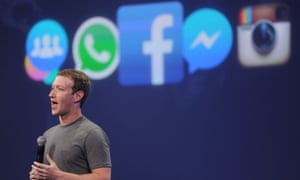
Facebook CEO Mark Zuckerberg

This 'redirecting' of publicizing income by advanced monsters, for example, Google and Facebook, alongside some of their different practices has raised to a level where it's presently being proposed that they now pay an 'exact on the operations of the biggest computerized delegates with the subsequent assets redistributed to non-benefit wanders with an order to create unique neighborhood or investigative news reporting.' The point of this plan is to have the capacity to put in any event in some sense, a stop to things like diminishment in quality inside news coverage and battle against the loss of employments inside it. 

I feel that this proposed amendment could do a good amount of help to the news industry as it is today. Particularly for more regional newspapers it would be of benefit and also investigative journalism which is something that's even deemed as a 'public good.' However before such a thing can actually be established in the first place, Parliament has to agree on it and observing whether they will or not will be particularly interesting. 


Facebook buys tool that tracks how stories spread #18

Facebook buys tool that tracks how stories spread


Considering that half of all Americans get their news from facebook this was an important investment for the media company. 'Crowdtangle' the analytical service that detects the most shared stories on a website and surfaces them to be on peoples pages. In another story facebook was accused of influencing the 2016 presidential election with their algorithmic system but this new 'spontaneous' change in system could be a way of making sure people see a range of stories that are popular and reflect both sides of an argument.

I believe that this new move to crowdtangle is because of the criticism about facebook influencing the election result, despite saying this was not true facebook still purchased this software which makes significant difference to what news stories appear on peoples pages. Some would argue that this is a way of controlling what people see on their pages although some would say this is a good thing as it opens people up to different sides of arguments.

Wednesday, 16 November 2016

Mark Zuckerberg rejects 'crazy idea' Facebook influenced US election result #17

Mark Zuckerberg rejects 'crazy idea' Facebook influenced US election result


Mark Zuckerberg speaking at the Techonomy conference in California

This article talks about how co-founder of  Facebook Mark Zuckerberg responds to comment made by some people accusing facebook of influencing more people to vote for Donal Trump for the US presidential election on November 8th 2016. Facebook uses an algorithmic system which means whatever people click on is noticed and stories and articles related to what people click on will be seen on their page. Zuxkerberg claims that people have the choice of what to click on as there is more than enough information for any type of argument as it is 'diversified'. He also says this is more than what traditional mass media can offer.

I dont believe facebook is completely to blame for influencing the election result although their algorithmic system could be updated or removed as people are only seeing what they want to see which is partly facebooks fault but nonetheless it is still the person that chooses to view it. 


Sunday, 13 November 2016

NDM: News Values

NDM: News Values


1) Read Media Factsheet 76: News Values and complete the following questions/tasks.

2) Come up with a news story from the last 12 months for each of the categories suggested by Harriss, Leiter and Johnson:
  • Conflict
  • Progress
  • Disaster
  • Consequence
  • Prominence 
  • Novelty

3) What example news story does the Factsheet use to illustrate Galtung and Ruge's News Values? Why is it an appropriate example of a news story likely to gain prominent coverage?
The example used is of a British service woman killed by a bomb blast in Afghanistan. This is a prominent news story because although its proximity is far away from home, she is still a British woman and that gains a 'cultural proximity'. Also, the story is intense as this was the first service woman killed in Afghanistan. 

4) What is gatekeeping?
A gatekeeper in terms of this topic is somebody who chooses what material sent in from the public is worth using.

5) What are the six ways bias can be created in news?
  • Bias through selection and omission, when selecting or editing a story the editor can be bias by choosing whether or not to use a specific story and what bits are shown of the story as this could paint another picture if things are left out.
  • Bias through placement, so where a story is placed online or in a news paper usually shows it's significance and if an important story is placed in the middle or towards the back then they maybe less appealing because people are accustomed to finding the most important stories at the front of the site/paper.
  • Bias by headline, the Headlines are one of the first things that someone reads on a newspaper, however headlines can be misleading, convey excitement and express approval/disapproval.
  • Bias by photos,captions and camera angles, the way a picture is taken or the way a video is shot can make a person look better and show them in a different way, either positively or negatively.
  • Bias through use of names and titles, different names and labels can be given to people to make them appear different in other peoples perspectives, for example 'Terrorist' can also be labelled as a 'freedom fighter'. 
  • Bias by choice of words, people can be influenced by the use of positive or negative words which carry with them certain connotations.
    6) How have online sources such as Twitter, bloggers or Wikileaks changed the way news is selected and published?
    Sites like wikileaks and twitter are providing a lot of the stories that regular channels choose which of those stories will be published or broadcasted.

    7) Give an example of a news story from the last 12 months that was reported as a result of online technology - Twitter, Wikileaks or similar.
    Wikileaks revealing Hilary Clintons emails from a breached email server.
    Donald Trump insulting people on twitter.

    8) Complete the task on the last page of the Factsheet regarding Sky News and Twitter:
    • What does this reveal about how Sky views Twitter as a news source?
    It suggests this is where a news story breaks and where people comment on this and give their own reports on how things happened.
    • What does it say about how news is being produced?
    It is indicating that news is being produced by the people usually via social media like twitter.User generated content is becoming a major part of news production now a days 
    • What role does the audience have in this process?
    Audiences are now empowered as they can publish their own content.
    • Why might this be a problem for journalistic standards?
    There may be a decrease in professional journalism because UGC is free and widely available, and because of this journalistic standards would most likely go down.

    9) In your opinion, how has new and digital media technology changed Galtung and Ruge’s news values? 
    NDM hasnt changed the news values that much as most of them are still relevant for today for instance 'negativity' which is always in the news and usually makes the headlines. However, things like immediacy have changed because of NDM as when a news story breaks it is much quicker and across different platforms. Moreover, amplitude has also been affected as many parts of the world have began developing and most people now have access to NDM technologies.

    10) How would you update them for 2016? Choose SIX of Galtung and Ruge's news values and say how each one has been affected by the growth of new and digital technology.

    Familiarity- news is becoming a lot more global with stories around the world being broadcasted on British national news also with news apps or online there are international sections and US sections to find news in other countries which isnt related to Britain.

    Amplitude- With population growing exponentially events that happen tend to be on a larger scale and reach a larger audience 

    Elite nations and people- Celebrity 'news' is becoming much more available with some magazines and channels dedicated to exposing their lives.

    Negativity- This seems to be increasing because of NDM with negative news stories from around the world being shared.

    Continuity- It is much harder to verify news stories coming from online social media and many hoaxes start here like the death of celebrities.

    Predictability -social media creates unpredictability through the use of things trending and creating something out of nothing. An example of this is the blue and black dress and how certain people perceived this in different ways


    Tuesday, 8 November 2016

    How Google's Digital News Initiative is evolving #16

    How Google's Digital News Initiative is evolving

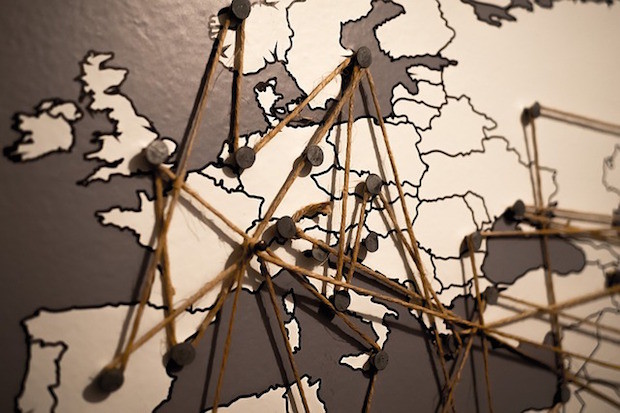
    world-1264062_640.jpg

    This article talks about how google is offering cash incentives to journalists from around the world to post their news stories online. Almost £130 million has been invested into this so far.  Moreover, google will not own any of the content that they will be promoting so cannot make a profit from it.

    This seems like a bid to save professional journalism, something google have been accused of starting in the first place by taking advertising revenue away from the newspapers where journalists had their stories, so some would argue that this is something google should have done before to help protect professional journalism.

    Telegraph paywall initiative is an interesting strategic shift #15

    Telegraph paywall initiative is an interesting strategic shift

    Chris Evans: seeking deeper engagement.

    The telegraph has recently announced that it will be putting its premium online content up behind a paywall. This means that a large amount of their content is still free for the public to view, , specifically 85%  although only premium content possibly some videos. This was also implemented to safeguard journalists jobs as online newspapers struggle to make money from advertising revenue. 

    I believe it could  be a risky move to out some content behind a paywall, for example when the sun went completely behind a paywall they suffered significantly although the telegraph are only putting a small amount of their content behind the paywall which could be a success but only time will tell.

    Sunday, 6 November 2016

    NDM News: Citizen journalism and hyper-reality

    NDM News: Citizen journalism and hyper-reality


    2) Create a blogpost where you make notes from the article under the following headings: 
    • examples
    -1991 video cameras becoming more widely available witnessing police brutality on Rodney King. 

    -December 26th 2004 asian tsunami captured by accidental journalists on mobile phones.

    -july 5th 2007 london terror attacks, unmediated footage to show on news channels.

    • theory (audience reception etc.) 
    -ugc

    -uses and gratifications no longer are audienced using news for surveillance they are taking in part in creating the content 
    • benefits to institutions
    -Free footage from public 

    • benefits to audience 
    -unmediated news raw footage 

    -Able to see what is going on faster

    - variety of places to access news from like social media 


    • wider issues and debates 
    -Professional journalists loosing jobs

    • SHEP
    S- Journalist loosing jobs
    H- audiences no longer passive
    E- institutions not paying for content 

    3) What is meant by the term ‘citizen journalist’?

    Citizen journalist/accidental journalist is a member of the public who has reported on a news story as it is happening by recording via smart phone or video camera, or talking about the occurring even on social media platforms. 

    4) What was one of the first examples of news being generated by ‘ordinary people’?

    One of the first examples was in  1991  when rodney king was excessively beaten by LA police officers. A man in an apartment building saw this and decided to record on his video camera and send it to news stations. Without this this crime would have gone unnoticed. Video cameras started this off but now a days most citizens use mobile phones to capture events as they happen.

    5) List some of the formats for participation that are now offered by news organisations.

    -comment sections 
    -chat rooms 
    -internet in general 

    6) What is one of the main differences between professionally shot footage and that taken first-hand (UGC)?

    Professionally shot footage is 'mediated' which means it is often stages and planned and occurs after the event has taken place. Whereas, UGC is un-mediated and raw footage usually of poor quality from somebodys mobile phone. 

    7) What is a gatekeeper?

    A gatekeeper in terms of this topic is somebody who chooses what material sent in from the public is worth using.

    8) How has the role of a gatekeeper changed?

    Gatekeepers now have to sieve through pointless spam like photos of kittens to try and find useful stories.

    9) What is one of the primary concerns held by journalists over the rise of UGC?

    Journalists fear for their jobs as UGC is rising and social media is becoming an important source for peoples news.

    10) Offer your own opinion (critical autonomy) on the following:

    UGC has meant that journalist are loosing their jobs and this puts everybody at a disadvantage as professional journalism has uncovered stories likes the watergate scandal and the people providing ugc dont have the skills to do this.


    Hyper-reality and the digital renaissance


    2) Create a new blogpost called 'Hyper-reality and the digital renaissance' and make notes from the article under the following headings: 
    • examples
    -Ciema 
    -TV
    -Internet 
    -social networking 
    • theories 
    -Audience reception how we as an audience decode the messages producers have put into their product with dominant,negotiated and rejected reading 

    - two step flow model 

    • positive aspects of new technology (or 'digital renaissance' 
    -New sources of information, people become more educated on international issues because of things like social media.

    • negative aspects of new technology on audiences and society 
    - Online/cyber bullying via social networks like facebook

    • wider issues and debates 
    3) The article was written in 2009. Offer three examples of more recent social networking sites or uses of technology that support the idea of a 'digital renaissance'.

    Snapchat
    periscope
    face time 

    4) How do live streaming services such as Periscope or Facebook Live fit into the idea of a 'digital renaissance'? Are these a force for good or simply a further blurring of reality?

    They do both in a way as it allows people to connect with other people from around the world sharing aspects of reality- being a force of good but also blurring from reality as some of what they say may be distorted or taken from somewhere else- blurring the reality.

    5) How can we link the 'digital renaissance' to our case study on news? Is citizen journalism a further example of hyper-reality or is it actually making news more accurate and closer to real life?

    I believe that it makes news more accurate as it isnt mediated or staged so it cant be hyper reality if it is a raw video. However by seeing the clip on various news sites or social medias the clip could come distorted and this would become an example of hyper reality.