Tuesday, 29 November 2016

Facebook doesn't need to ban fake news to fight it #23

Facebook doesn't need to ban fake news to fight it

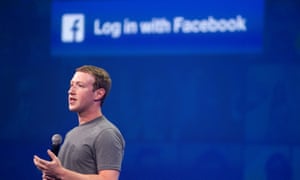
Facebook’'s Mark Zuckerberg

After the caution the distributing of fake news by Facebook has brought on, extending from death tricks about Tiger Woods to lies in regards to the US presidential hopefuls, it's presently being put into question whether they ought to really be the ones adhering to a meaningful boundary with regards to the news that is being distributed. This has been achieved with it now being asked whether we'd 'be revolted on the off chance that one organization claimed every one of the newspaper kiosks and chose what was appropriate and uncalled for perusing charge.

I believe that this new move to crowdtangle is because of the criticism about facebook influencing the election result, despite saying this was not true facebook still purchased this software which makes significant difference to what news stories appear on peoples pages. Some would argue that this is a way of controlling what people see on their pages although some would say this is a good thing as it opens people up to different sides of arguments.


Sunday, 27 November 2016

Exam question Marxism&Pluralism


The development of new/digital media means the audience is more powerful in terms of consumption and production. Discuss the arguments for and against this view.

Arguments that support this view include the pluralist argument which would suggest that audiences are empowered as 70% of the UK now have access to the internet meaning consumption is at an all time high and with 18million regular blog readers it would also suggest production is growing among ordinary citizens. However, from a Marxist point of view audiences are not considered to be empowered and instead they are controlled by the large media conglomerates and multinationals like newscorp and google who’s revenues are in the dozens of Billions every year and this appears to be growing. This essay will further explore these arguments in terms of audience empowerment with consumption and production.

A Marxist perspective would argue that the so-called “information revolution” has done little to benefit audiences or to subvert the established power structures in society. Far from being a “great leveller” (Krotoski, 2012) as many have claimed, it has merely helped to reinforce the status quo by promoting dominant ideologies. The most popular news website in the UK by a considerable margin is the ‘Mail Online’, which receives more than 8 million hits every month and is continuing to expand rapidly – with forecasts that it will make £100 million or more in digital revenues in the next three years. Similar to its tabloid print edition, the website takes a Conservative, right-wing perspective on key issues around gender, sexuality and race and audiences appear to passively accept what the Marxist theorist, Gramsci, called a hegemonic view. When one of their chief columnists, Jan Moir, wrote a homophobic article about the death of Stephen Gately in 2009 there were Twitter and Facebook protests but, ultimately, they did not change the editorial direction of the gatekeepers controlling the newspaper.

However, a pluralist would argue that audiences are more powerful as a result of new and digital media. Briggs and Burke describe the internet as ‘the most important medium of the 21st century’. This invention has revolutionised the way audiences consume and produce media products and sparked a wave of new technology and communications devices which has led to the rapid development of countries around the world and the empowerment of millions of people like in South Korea. Moreover, a pluralist would suggest audiences use the media for things like surveillance and information and this is true for instance during the Arab spring protests people used social media- a product of new and digital media to organise protests and to find out what was going on which otherwise wouldn’t have been broadcasted by their governments. ‘Rebellion is encapsulated by the internet,’(Keen) this reinforces the idea of being able to protest and organizing this on social media by the people would indicated that they are empowered as producers and consumers.

However, another Marxist view would suggest that audiences are not empowered with developments in new and digital media and are, according to the theorist Gramsci are dominated by one social class who maintain and enforce hegemonic control. Moreover, Debotton- another theorist would claim that ,’news outlets need their audiences to be frightened in order to get through to us’ this, along with Gramscis theory fully supports the Marxist argument as it is clear that in tabloid news and tv news bad news of pain and destruction is frequent and the balance between this and good news is heavily leaning towards the bad and one would get the feeling that this is what the media institutions want us to see and usually end up creating a moral panic. This would suggest that audiences are not empowered. Furthermore De Botton also said that we have ‘narrow minded news’ meaning the news is bias and as consumers we aren’t empowered to change it and are essentially spoonfed the information that the large media conglomerates want us to see for instance companies like Google and the mail online are earning 100’s of billions over the course of several years, and this supports the Marxist view and indicates that audiences aren’t empowered.


A Pluralist viewpoint may contend that; as far as News utilization the E-media stage has been a critical help in allowing to the greater part of the start up and 'bungalow Industries' who need to create news content. The web and all the more particularly online networking (Facebook, Instagram) can be depicted as the "Mechanical blooming of the way of life of flexibility, individual development and entrepreneurialism" (Castells, 1996) in light of the fact that for a crowd of people it not just gives them much more wellsprings of news to browse, which is supportive of pluralism as Pluralist's consider society to be comprising of contending gatherings and interests, none of them overwhelming constantly; however it likewise gives them a stage which is to a great extent out of state control so they can report and discuss news stories continuous. However this might be an issue in a few states where the Government in control has to a greater extent a Marxist view and confines access to perspectives which conflict with there possess philosophies, for instance Russia and China have now both gone into assentions about firmly extending there firewalls to limit and screen content over the Internet. This obviously is a Marxist view and unmistakably demonstrates the perspective of an industrialist society as being one of class control. Doing a reversal to take a gander at how groups of onlookers devour media, specifically; where they see there News on the Internet as taking a gander at the OFCOM report of national review insights it expressed that around 43% of individuals who utilize the Internet for their News utilize online networking destinations, for example, Facebook and Twitter. Facebook and Twitter are both locales which many set up news associations use to exhibit there news yet it is likewise a stage for subject columnists who compose what they see and this is the reason online networking has such high client activity since groups of onlookers can believe this and not acknowledge the standards of an overwhelming society which is the thing that they may get when taking after bigger news associations. Subsequently, another pluralist point of view paretos law can be disregarded with Negropontes theory,’ the monolithic empires of mass media are dissolving into an array of cottage industries’ this is suggesting that consumers now have a significant amount of sources to instead of using the select few chosen by their own government which unfortunately in countries like north korea is still the case.


To conclude, I believe both arguments can be criticised but I agree more with the pluralist argument as the idea of pluralism is incorporated into the UK’s democracy as power is dispersed amongst regional governments and most importantly to the people which is what pluralism in the media does, it empowers the people to be able to make their own decisions on the web and developments into new and digital media means more people can have access to this new form of freedom though it is still important to remember that the Marxist argument can be applied to some parts of the developing  world though much of the developed world encourages the pluralist argument.
Tuesday, 22 November 2016

Politics has gone wrong. Is digital technology to blame? #22

Politics has gone wrong. Is digital technology to blame?

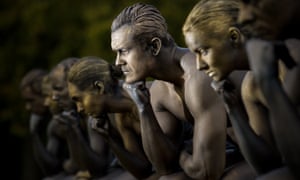
Nine models posed as Rodin’s The Thinker mark the launch of the Nine Dots prize

This articles talks debates whether technology is to blame for politics going wrong. The writer describes politics going wrong as this year brexit was voted in and at the time this was written people strongly believed Donald Trump was going to be elected and now we know this has become a reality. 

I disagree that the internet is to blame as i believe it to an extent strengthens democracy, when Clinton was first eletcted in 1992 the internet and mobile phones were a new invention and helped to expand democracy and promote clintons ideologies, aslo it meant things in congress could get done a lot quicker with email instead of signing everything by hand and recieving news this way. Moreover, the internet has allowed pressure groups like the 38degrees in the UK to hold the government to account outside of general elections which is important for democracy.

Obama is worried about fake news on social media – and we should be too #21

Obama is worried about fake news on social media – and we should be too

Research has found that 62% of US adults turn to social media for news, yet there is little distinction between truth and lies.

This news article is reviewing obamas comments made in the new yorker about the news being false online and the impact this might have had on the recent election, “If we can’t discriminate between serious arguments and propaganda, then we have problems.” this quoted from him speaks for itself as fake news that people believe to be true can have serious impacts.

I believe that fake news is becoming a real issue and with 62% of US adults using social media for their news fake news stories are in abundance here and this has lots of influence. Also during the UK referendum campaign the lie about the mysterious £350 million could have swayed a lot of voters whilst not even being true. 

Marxism & Pluralism: Alain de Botton on the news

Marxism & Pluralism: Alain de Botton on the news


1) To what extent do you agree with Alain de Botton's views on the News?
To some extent i do agree with Alan de Botton's views, as it is clear that celebrity news is often on the front page whereas more intellectual news like politics is pushed further back, however this can't be said for all newspapers as some like the Guardian focus more on things like politics. Although i can see that gossip does make the front pages i believe it is entirely dependent on the newspaper and its audience type. This arguably useless news reflects its audiences and 20-30 years ago people like Katie price wouldn't make front page news but with this sought of news being spread around is it suggesting the population is becoming less sophisticated? and this is where i agree with Alan as more useful news is being pushed back and is actually stuff people need to know but choose not too possibly because they have become used to seeing celebrities on the front pages.

2) How can you link Marxism and Hegemony to de Botton's criticisms of the News?
Alan de Botton criticises the news by saying that they spoon feed their passive audiences news without them questioning it which also links to the hypodermic needle model. This links to marxism and hegemony because it reinforces the idea of one dominant social class owning the news and flooding it with their own ideologies and views, and this is what a passive audience tends to believe.

3) How could you use Pluralism and new technology to challenge de Botton's views on the News?
Pluralism would suggest that we have the power to choose what we decide to read and from where so that we arent influenced by one dominant social class. But also because of new technologies we are capable of creating our own news-user generated content via social media like twitter and facebook.
4) Choose two news stories from the last six months - one that supports de Botton's views and one that challenges his belief that the News is used for social control. 
https://www.thesun.co.uk/news/2237337/inside-the-home-on-estate-where-tv-icon-lived-that-has-gone-on-sale-for-1million-and-can-you-guess-which-one/ this pointless news story would support de bottons views on useless news being put infront of more useful news like the appointments that president elect trumps has been making this week which is something that affects the whole world but isnt a priority.


Sunday, 20 November 2016

NDM: Marxism, Pluralism and Hegemony

NDM: Marxism, Pluralism and Hegemony


1) Research the Ian Tomlinson case. What would the traditional, hegemonic view of the police be in a case like this? How did new and digital media create a different story? What does the police officer's subsequent acquittal suggest about the power of new and digital media?
Ian Tomlinson died when a police officer struck him with a bat at the 2009 G20 summit march in London. Originally the police claimed that,'London. Originally the police issued a statement that:
described attempts by police medics and
an ambulance crew to save his life after he
collapsed – efforts they said were marred by
protesters throwing missiles as first aid was
administered.'
Without the invention of Web 2.0 and the ability to share amateur content on places such as youtube this crime would have gone unpunished and the traditional hegemonic view that the police are above every other class in society would have been reinforced.

2) What does the author argue regarding whether hegemony is being challenged by Web 2.0? 
The author suggests that it is being challenged as people can directly challenge government through the use of new and digital media. 'Technology empowers the people' this is important as access to smart phones and other recording devices as well as blogs and streaming/video sharing sites allows people to give their unmediated opinion. However, in places like China or North Korea where the government still has heavy influence on what the people share and view web2.0 isnt as significant on the whole world but its impacts so far have been felt.

3) In your opinion, does new and digital media reinforce dominant hegemonic views or give the audience a platform to challenge them?
I believe it does both but more so gives the audience the platform to challenge them as without this the hegemonic views would exist without challenge and whilst the audiences arent completely empowered its better than not having any kind of platform to challenge the hegemonic views.

4) Do recent world events such as Brexit or Donald Trump's election in the US suggest dominant hegemonic ideologies are being challenged or reinforced? There are arguments for both sides here - explain your opinion and why.
I do believe they are being challenged as especially in the world of politics things are changing and not in the way people expected as things have gone to the 'extreme' right of the political spectrum which is the opposite of what many people would think that would challenge hegemonic views. By voting for things like Brexit in the UK and electing Trump in the US this could be a protest of people protesting the already hegemonic leaderships in the world. In the US election many supporters of Bernie Sanders a candidate of the democrat party leaning towards the extreme left arguably had more support than Clinton and after his loss in the primaries an influential amount of his supporters went to supporting a candidate on the extreme right-Donald Trump. I believe that this is a protest of the people against government control just swung in the opposite way many had not expected to happen.

Thursday, 17 November 2016

BBC News most trusted source for more than half of people in the UK #20

BBC News most trusted source for more than half of people in the UK

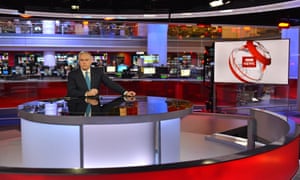
BBC News, which more than half of people in the UK regard as the most trustworthy source.

The greater part of the general population in the UK view the BBC as their most trusted wellspring of news, as indicated by an overview directed by 38 degrees. The organization's size and extension stays dubious after a year ago's financing settlement in which went up against the £700m cost of free TV licenses for the more than 75s.The BBC likewise positioned beat when given a choice of non-one-sided communicate wellsprings of news.

Being a non-biased news source now-a-days is important for the people to rely on as information is usually distorted and not always true from other sources as they would have some political sway and opinion.